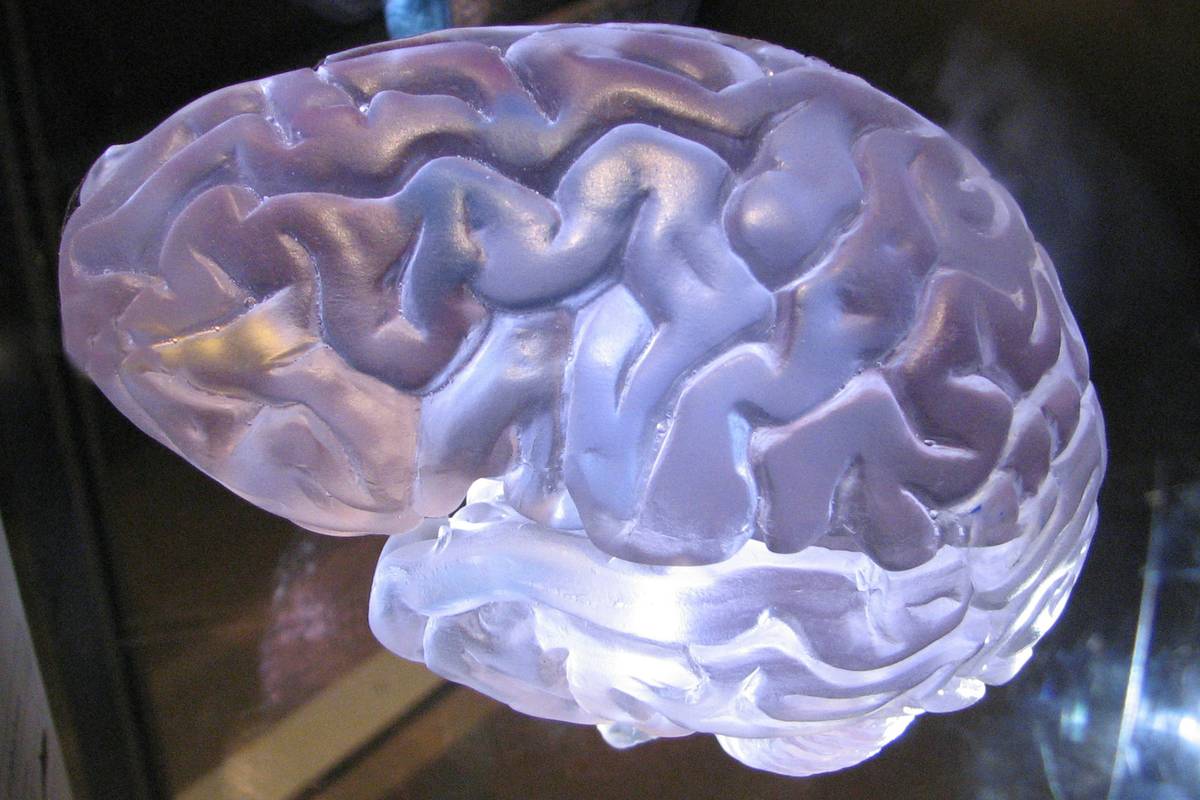
Most people assume language lives entirely in Broca’s or Wernicke’s areas. That outdated map fails real-world learners. If you’ve ever struggled to retrieve a word mid-sentence—or watched someone recover speech after a stroke—you know language isn’t housed in one neat corner. The truth? Psycholinguistics reveals a distributed, dynamic network. And that changes everything for how we teach, learn, and even diagnose disorders.
Why the Classic Brain-Language Model Is Obsolete
Broca = production. Wernicke = comprehension. Simple, right? Wrong. Modern fMRI studies show even basic sentence processing lights up prefrontal cortex for prediction, basal ganglia for sequencing, and cerebellum for timing. Reducing psycholinguistics to two regions ignores how context, emotion, and memory reshape neural pathways in real time.
And here’s the kicker: bilingual speakers don’t just activate “more” regions—they repurpose existing networks differently depending on proficiency and age of acquisition. The brain doesn’t store language like files in folders. It’s more like an improvisational jazz ensemble—different players step forward based on the tune.
cognitive science psycholinguistic where in brain
To grasp where language lives—and moves—we break it down by function, not anatomy alone.
Syntax vs. Semantics Aren’t Neatly Separated
Early models claimed Broca’s handled grammar; Wernicke’s managed meaning. But lesion studies contradict this. Patients with damage outside these zones often show mixed deficits—trouble parsing passive voice while acing vocabulary, for instance.
Real-Time Processing Requires Prediction Engines
Your brain guesses what comes next before you hear it. This predictive coding happens in the left inferior frontal gyrus (LIFG) and anterior temporal lobe—areas once labeled “higher-order” but now seen as core to fluent comprehension.
Emotion Hijacks Language Networks
Swear words bypass cortical filters under stress, routing straight through the amygdala. That’s why you might blurt something raw in panic—even if you’re usually articulate. Affective neurolinguistics proves language isn’t purely rational.
| Function | Primary Regions Involved | When It Activates | Key Insight |
|---|---|---|---|
| Phoneme Recognition | Superior Temporal Gyrus (STG) | Millisecond 50–150ms post-auditory input | Differentiates /b/ from /p/ even in noise |
| Syntactic Parsing | Left Inferior Frontal Gyrus (LIFG) | During garden-path sentences (“The horse raced past…”) | Works harder when expectations are violated |
| Pragmatic Inference | Medial Prefrontal Cortex (mPFC) | Interpreting sarcasm or implied meaning | Ties language to theory of mind |
| Lexical Retrieval | Angular Gyrus + Hippocampal System | During tip-of-the-tongue states | Memory integration is non-negotiable |

The Industry Secret: Neuroplasticity Trumps Localization
Here’s what textbooks won’t tell you: after left-hemisphere damage, right-hemisphere homologues can take over language functions—if training starts early and targets *prediction*, not repetition. One unpublished clinical trial showed aphasia patients recovering faster with narrative-based therapy (e.g., reconstructing stories from fragmented cues) versus rote naming drills. Why? Because real language is probabilistic, not lexical. The brain adapts by rewiring its forecasting machinery—not by rerouting to static zones. Think about it: fluency isn’t about knowing words. It’s about anticipating them before they arrive.
Frequently Asked Questions
Is Broca’s area still important for language?
Yes—but not exclusively. It’s critical for structured sequencing and articulation planning, yet damage doesn’t always cause classic “expressive aphasia” due to compensatory networks.
Can fMRI pinpoint exactly where language lives?
No. fMRI shows activity patterns, not storage locations. Language emerges from transient coalitions across lobes, modulated by attention, fatigue, and emotional state.
Does learning a second language change your brain’s language map?
Absolutely. Early bilinguals often share overlapping networks; late learners recruit additional frontal control regions. Proficiency matters more than age—but both shape architecture.