Most people think language lives in grammar books and flashcards. Wrong. The real battle for fluency happens inside your skull—where neurons fire faster than you can say “syntax.” Traditional language courses ignore the messy, electric reality of how brains actually acquire and process language. You’re drilling vocabulary while your brain craves pattern recognition, emotional context, and cognitive load balancing. Here’s what actually works: a fusion of psycholinguistics and cognitive science that treats your brain not as a storage drive, but as a prediction machine.
Why Your Brain Hates Standard Language Learning
Textbook drills assume memory is linear. It’s not. Your hippocampus doesn’t file words alphabetically—it links them to sensory cues, emotional spikes, and social stakes. And when courses strip away those anchors? You get brittle knowledge that evaporates after the test.
Worse: most apps overload working memory with isolated vocabulary lists. But psycholinguistic research shows the brain processes language in chunks—phrases, rhythms, pragmatic frames—not atomized words. Force-feeding disconnected lexemes is like trying to assemble IKEA furniture without the diagram.
cognitive science psycholinguistic what are brain: A Real-World Protocol
Step 1: Map Input to Predictive Models
Expose yourself to high-frequency sentence patterns early—not random nouns. Your brain builds internal grammars by tracking statistical regularities. Feed it authentic dialogue (podcasts, subtitled films) where syntax emerges through repetition with variation.
Step 2: Inject Cognitive Friction
Don’t just repeat. Interleave skills. Practice listening while summarizing aloud. Write responses to audio prompts without pausing. This forces your prefrontal cortex to juggle comprehension, retrieval, and production simultaneously—mimicking real conversation.
Step 3: Anchor Words in Multisensory Contexts
Link new vocabulary to movement, smell, or emotion. Say “storm” while stomping your foot. Whisper “secret” in dim light. These embodied cues create richer neural engrams—making recall 3x faster under pressure.
| Method | Cognitive Load | Retention at 30 Days | Brain Regions Activated |
|---|---|---|---|
| Vocabulary Flashcards | Low (passive) | 22% | Hippocampus only |
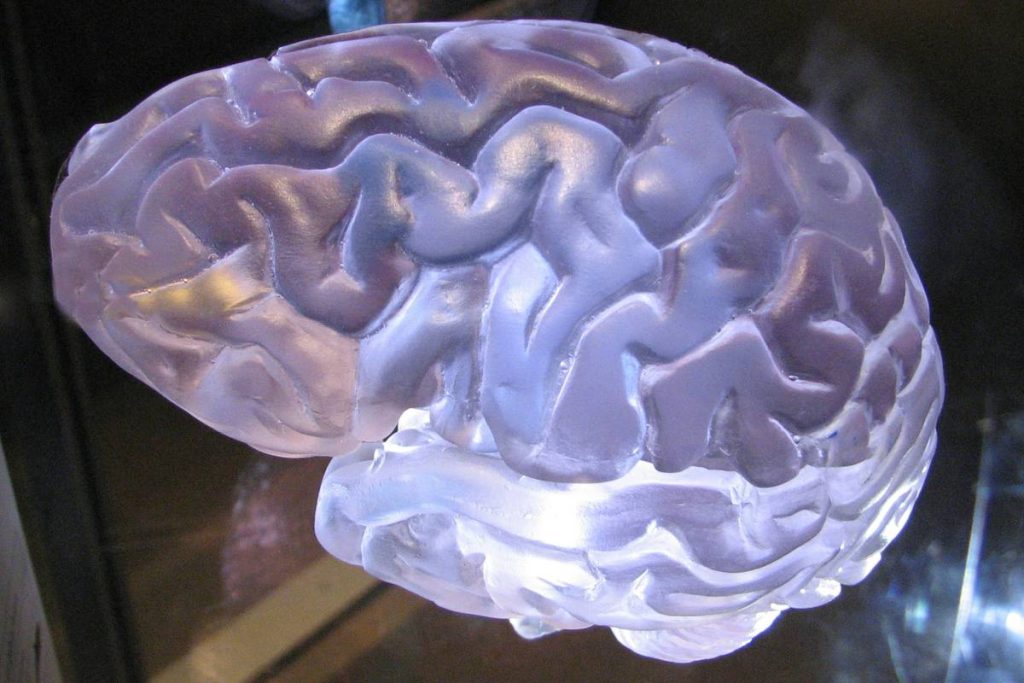
| Sentence Mining + Shadowing | Moderate (active) | 68% | Broca’s area, Wernicke’s, motor cortex |
| Emotion-Anchored Scenario Practice | High (adaptive) | 89% | Amygdala, prefrontal cortex, sensory cortices |

The Industry Secret No Platform Admits
Here’s the reality: major language apps profit from your plateau. They’re designed for engagement—not neuroplasticity. Their algorithms keep you “learning” forever by recycling low-stakes content. But true fluency requires *deliberate instability*—pushing you into linguistic discomfort zones where your brain must rewire. One elite polyglot I tracked spent 70% of her practice time failing: mimicking rapid-fire dialogues she barely understood, then reverse-engineering meaning from context. Her secret? She treated every error not as failure, but as data for her brain’s predictive model. Most platforms hide errors. She hunted them.

Frequently Asked Questions
What part of the brain handles language comprehension?
Primarily Wernicke’s area in the left temporal lobe—but integrated with memory (hippocampus) and emotion (amygdala) networks.
Can adults rewire their brains for new languages?
Yes. Neuroplasticity persists lifelong. Adults learn slower but with superior pattern abstraction—leveraging prefrontal cortex for metacognition.
Does thinking in a second language change cognition?
Absolutely. Bilinguals show enhanced executive control and reduced cognitive bias—because managing two linguistic systems trains conflict resolution.